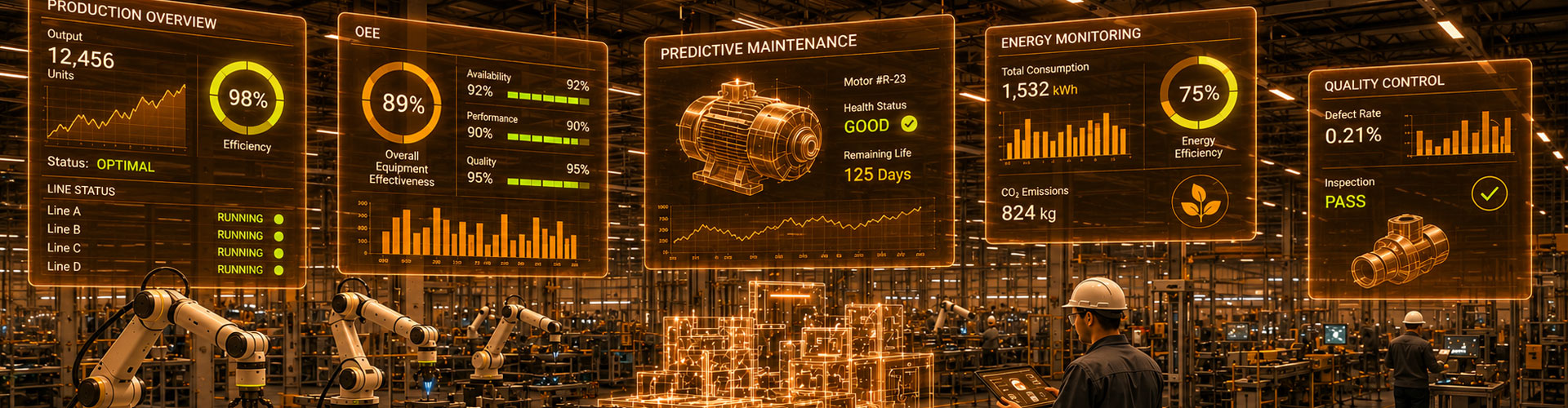
In today’s rapidly evolving industrial landscape, businesses worldwide are under increasing pressure to innovate, optimize operations, and remain globally competitive. The rise of Industry 4.0 has transformed traditional manufacturing and industrial operations into intelligent, connected, and data-driven ecosystems. From artificial intelligence and automation to Industrial IoT and predictive analytics, Industry 4.0 is redefining how businesses operate, compete, and grow in the global economy.
As industries face rising operational costs, supply chain disruptions, labor shortages, and growing customer expectations, companies that fail to embrace digital transformation risk losing their competitive edge. Industry 4.0 is no longer an option — it has become a strategic necessity for organizations aiming to thrive in international markets.
At Crescendo Worldwide, we work closely with businesses, manufacturers, investors, and global enterprises to support digital transformation, industrial modernization, and global expansion strategies that enable sustainable long-term growth.
Industry 4.0 refers to the fourth industrial revolution, where advanced digital technologies are integrated into manufacturing, industrial processes, and supply chains. It combines intelligent automation, real-time data exchange, machine learning, cloud computing, robotics, and connected systems to create smart and efficient industrial environments.
Key technologies driving Industry 4.0 include:
These technologies enable businesses to improve productivity, reduce downtime, enhance quality control, and make faster strategic decisions.
One of the biggest advantages of Industry 4.0 is its ability to streamline operations through automation and intelligent systems. Smart factories can monitor machines in real time, identify inefficiencies, and reduce production delays.
Automation minimizes manual errors while improving speed, consistency, and overall productivity. Businesses adopting Industry 4.0 technologies can significantly lower operational costs while increasing output quality.
Companies that operate efficiently gain stronger positioning in international markets where pricing, quality, and delivery timelines are critical factors.
Modern industries generate enormous amounts of operational data daily. Industry 4.0 technologies help businesses collect, analyze, and interpret this data to make informed decisions faster.
Predictive analytics allows organizations to forecast equipment failures, optimize inventory, improve production planning, and understand customer behavior more effectively.
Real-time insights empower businesses to respond quickly to market changes and improve strategic planning, which is essential for maintaining global competitiveness.
Recent global disruptions have highlighted the importance of resilient and agile supply chains. Industry 4.0 enables companies to monitor supply chain activities in real time and respond proactively to disruptions.
Smart supply chain systems improve:
Companies with digitally connected supply chains can maintain operational continuity and meet customer expectations even during uncertain market conditions.
Industry 4.0 technologies help manufacturers maintain high-quality standards through automated inspections, AI-based monitoring systems, and precision manufacturing.
Smart manufacturing systems can detect defects instantly, reducing waste and improving product consistency. This leads to higher customer satisfaction, stronger brand reputation, and improved market competitiveness.
In global markets, quality assurance plays a major role in winning international contracts and long-term business partnerships.
Global competition requires businesses to innovate continuously. Industry 4.0 accelerates product development cycles through digital simulations, AI-driven testing, and collaborative engineering systems.
Businesses can launch products faster, customize solutions more efficiently, and respond to changing customer demands with greater flexibility.
Companies that innovate quickly are more likely to secure leadership positions in international industries.
Industry 4.0 supports sustainable manufacturing by improving energy efficiency, reducing material waste, and optimizing resource utilization.
Smart energy management systems help companies lower energy consumption and operational expenses. Predictive maintenance reduces costly machine breakdowns and extends equipment lifespan.
This combination of cost efficiency and sustainability improves both profitability and environmental performance.
Artificial Intelligence and automation are at the center of Industry 4.0 transformation. AI-powered systems can analyze massive datasets, identify patterns, and automate complex industrial processes.
Applications of AI in Industry 4.0 include:
Automation also helps companies address labor shortages and improve workplace safety by reducing dependence on repetitive manual tasks.
Companies adopting Industry 4.0 technologies are better positioned for international growth and market expansion. Digital transformation enables businesses to scale operations efficiently while maintaining global standards.
Industry 4.0 supports international business expansion through:
As governments worldwide promote smart manufacturing and industrial modernization, companies investing in Industry 4.0 are gaining access to new partnerships, incentives, and investment opportunities.
Despite its advantages, implementing Industry 4.0 comes with certain challenges:
High Initial Investment
Advanced technologies and digital infrastructure require significant capital investment.
Cybersecurity Risks
Connected industrial systems increase exposure to cyber threats and data breaches.
Workforce Skill Gaps
Companies need skilled professionals capable of managing AI, automation, and digital systems.
Integration Complexity
Integrating legacy systems with modern technologies can be technically challenging.
However, organizations that invest strategically in digital transformation can overcome these barriers and unlock long-term competitive advantages.
The future of Industry 4.0 is expected to become even more advanced with the growth of AI, 5G connectivity, autonomous robotics, edge computing, and sustainable industrial technologies.
Global industries are moving toward fully connected smart ecosystems where machines, systems, and supply chains operate seamlessly through intelligent communication and automation.
Businesses that adopt Industry 4.0 early will likely lead the next generation of industrial growth, innovation, and international competitiveness.
Industry 4.0 is reshaping the global industrial landscape and becoming essential for companies seeking long-term competitiveness. Businesses that embrace intelligent automation, AI, digital transformation, and smart manufacturing technologies are gaining significant advantages in productivity, innovation, efficiency, and global market positioning.
As global industries continue evolving, organizations that delay digital transformation risk falling behind competitors that are already leveraging Industry 4.0 technologies to scale faster and operate smarter.
For businesses aiming to strengthen their international presence and future-proof their operations, Industry 4.0 is not just a technological trend — it is a strategic foundation for sustainable global growth.