
Introduction
The global investment landscape is changing rapidly. While factors such as market size, infrastructure, and workforce availability remain important, sustainability and ESG considerations are increasingly influencing investment decisions.
This has contributed to the rise of Green Foreign Direct Investment (Green FDI). Although there is no single global definition of Green FDI, the term is commonly used to describe foreign investments that support low-carbon, climate-resilient, and environmentally sustainable activities such as renewable energy, electric vehicles, green hydrogen, and sustainable manufacturing.
As governments introduce stronger climate policies and companies strengthen their ESG commitments, investors are increasingly seeking destinations that can support sustainable growth and resilient supply chains.
For governments, investment promotion agencies, and businesses, understanding these changing global investment flows is becoming essential to attracting the next generation of international investment projects.
What Is Green FDI?
Green FDI refers to foreign direct investments that support environmentally sustainable economic activities. These investments typically focus on sectors such as renewable energy, electric mobility, energy-efficient manufacturing, green hydrogen, sustainable infrastructure, circular economy initiatives, and clean technologies.
Unlike traditional FDI projects that primarily focus on economic returns, Green FDI aims to create both economic and environmental value.
According to global investment trends, clean energy and decarbonization technologies are increasingly becoming major drivers of manufacturing growth and industrial competitiveness. Investors are now seeking destinations that can support long-term sustainable development while helping businesses achieve their ESG commitments.
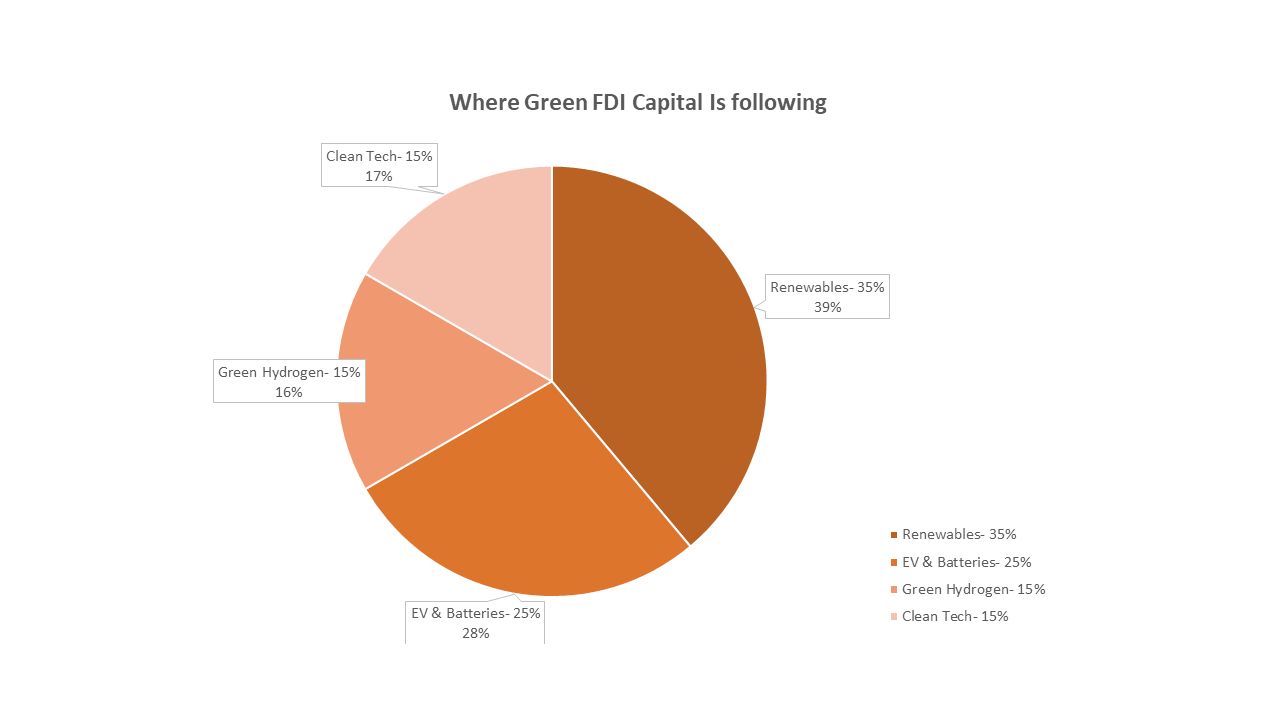
Why ESG Is Influencing Investment Decisions
Over the past few years, ESG considerations have moved from being optional corporate initiatives to becoming central investment criteria.
Investors, financial institutions, and multinational companies are under growing pressure from regulators, shareholders, and consumers to invest responsibly.
Today, companies evaluating international expansion opportunities often assess the following:
- Availability of renewable energy
- Carbon reduction policies
- Sustainable supply chains
- Climate risk exposure
- ESG reporting requirements
- Green manufacturing ecosystems
As a result, countries that actively promote sustainability and green industrial policies are becoming increasingly attractive destinations for global investment.
This shift is also influencing global FDI trends, with investors increasingly favouring regions that offer both commercial opportunities and strong sustainability frameworks.
How Climate Policies Are Changing Manufacturing Investment
Climate policies are significantly reshaping global manufacturing strategies.
Governments worldwide are introducing stricter environmental regulations, carbon pricing mechanisms, and incentives for clean technologies. These policies are encouraging companies to rethink where and how they invest.
For example, manufacturers are increasingly seeking locations that offer:
- Access to renewable energy
- Green industrial zones
- Sustainable infrastructure
- ESG-friendly regulatory frameworks
- Support for low-carbon manufacturing
As global decarbonization efforts accelerate, sustainable manufacturing is becoming a major factor influencing investment decisions.
Countries that can provide favourable conditions for green manufacturing are positioning themselves as future leaders in attracting green FDI.
Which Countries Are Winning Green FDI?
Several countries and regions are emerging as leaders in attracting sustainable investment projects. Nations that invest heavily in renewable energy infrastructure, green industrial policies, and clean technology ecosystems are increasingly winning global investor interest.
Countries and regions such as Germany and other EU member states, the UAE, Singapore, and several US states are increasingly highlighting green industrial policies, renewable energy access, and sustainable infrastructure to position themselves as preferred destinations for green FDI. These destinations are building integrated ecosystems that combine policy support, grid modernisation, and skilled talent to attract manufacturing and technology investments aligned with climate goals.
For investment promotion agencies, understanding these global investment flows and the strategies of leading destinations is essential for developing competitive, future-ready investment attraction plans.
High-Growth Sectors Attracting Green Investment
Green FDI is creating significant opportunities across multiple sectors.
Renewable Energy
Solar, wind, battery storage, and grid modernization projects continue to attract substantial global investments.
Electric Vehicles (EVs)
The global transition towards sustainable mobility is driving investments in EV manufacturing, charging infrastructure, and battery production.
Green Hydrogen
Green hydrogen is emerging as one of the most promising areas for future industrial investment.
Sustainable Manufacturing
Manufacturers are increasingly adopting energy-efficient production methods and circular economy principles.
Clean Technologies
Artificial intelligence, smart manufacturing, carbon management solutions, and environmental technologies are becoming important investment sectors.
These industries are expected to play a critical role in shaping future foreign direct investment trends.
What actions are necessary for Investment Promotion Agencies to take?
The rise of Green FDI presents both opportunities and challenges for governments and investment promotion agencies.
Traditional investment attraction strategies may no longer be sufficient.
To remain competitive, investment destinations should focus on:
- Developing green industrial policies
- Investing in sustainable infrastructure
- Strengthening renewable energy capabilities
- Promoting ESG-friendly business environments
- Supporting sustainable manufacturing ecosystems
- Positioning themselves as long-term green investment partners
Investment promotion agencies that align their strategies with sustainability objectives will attract more global investment projects.
The Future of Sustainable Investment Attraction
Green FDI is no longer a niche investment trend it is rapidly becoming a central pillar of global investment strategies.
As climate policies evolve and ESG expectations continue to rise, investors will increasingly seek destinations that can support sustainable growth, resilient supply chains, and responsible manufacturing practices.
For governments, economic development organizations, and businesses, this presents a significant opportunity.
Those who act early, invest in sustainable infrastructure, and create supportive policy environments are likely to emerge as leaders in the next wave of global investment flows.
Conclusion
The future of global investment is becoming increasingly green.
Climate policies, ESG considerations, and the transition towards sustainable manufacturing are fundamentally changing how investors evaluate international opportunities.
For investment destinations and businesses alike, understanding Green FDI trends is no longer optional it is essential.
As global competition for investment intensifies, countries and regions that prioritize sustainability, innovation, and clean industrial development will be best positioned to attract long-term investment and create resilient economic growth.
At Crescendo Worldwide, we closely monitor emerging global investment trends and work with governments, investment promotion agencies, and businesses to identify opportunities, strengthen investment strategies, and facilitate meaningful international partnerships in an evolving investment landscape.